
"northern Haiti coffee"
400 article(s) found

Dominica Santo Domingo Coffee with a faint fragrance; an introduction to the characteristics of the manor area
In 1700, the Bourbon dynasty replaced the Habsburg dynasty in Spain. The new dynasty introduced some economic reforms. Trade in Santo Domingo began to flourish. [3] French rule (1795-1809) in 1795, France and Spain signed the Basel Peace Treaty in Switzerland, agreeing to cede the Santo Domingo area in the eastern island of Dominica to France.

Introduction to the flavor and taste characteristics of delightful Dominica boutique coffee beans
Unlike coffee produced in Haiti, most of the coffee grown in the Dominican Republic has been washed, which is a symbol of high quality. Miniga Coffee uses a washing method to treat coffee beans, so that the quality of treated coffee beans is more guaranteed. The coffee beans treated by washing method retain more original flavor than the drying method, and the aroma is pure and soft. Carefully selected and made in this way

Introduction to the Brand of Grinding scale in Dominica Coffee Bean production area
Dominica is located on the island of Hispaniola in Central America, just above Martinique Island. Dominica occupies 2/3 of the right half of Hispaniola, while the other 1/3 to the west is the territory of Haiti. It is rich in natural resources, rich in coffee, cocoa, oranges, bananas and flowers. Coffee ranks among the country's gross domestic agricultural output in recent years.

Introduction to the characteristics of Dominica Coffee Flavor and taste Manor
In 1677, about 4,000 French lived in 11 villages in the west of the island. In 1697, France and Spain ceded the western part of the island to France according to the Leswick Treaty of the Alliance War, formally recognizing French sovereignty over Haiti in the western part of the Spanish island, and the eastern part of the Spanish island was called East Santo Domingo. France continues to develop its agricultural economy on the island of Hispaniola.

Fresh and elegant Santo Domingo fine coffee beans grinding degree roasting degree processing method
Dominican coffee is graded in AA, AB, etc. size, but coffee rules such as Siwao and Barahona are also classified as top quality. Both coffees are harvested in February to May and are washed. Such flavor characteristics are not only related to varieties and planting soil quality, but also closely related to the picking and processing methods of raw beans.

Delicious aroma Dominican coffee beans Flavor Taste Aroma Description Introduction
Dominican coffee tastes slightly different according to the altitude of the planting area. Highland coffee is sour, but the taste is rich; lowland coffee is less sour and tastes smoother. Some Dominican estates produce high-quality coffee beans that are rich in aroma, rich in taste, and moderately bright in acidity, and are often brought to the prestigious Puerto Rico or Jamaica coffee

Pure and soft aroma washing method for the treatment of coffee beans introduction to fine coffee
Unlike coffee produced in Haiti, most of the coffee grown in the Dominican Republic has been washed, which is a symbol of high quality. Miniga Coffee uses a washing method to treat coffee beans, so that the quality of treated coffee beans is more guaranteed. The coffee beans treated by washing method retain more original flavor than the drying method, and the aroma is pure and soft. Carefully selected and made in this way

A brief introduction to the market price of bright and sour Dominican boutique coffee beans
The earliest coffee in Dominica was introduced from Martinique (the overseas province of France), dating back to the early 18th century. Dominica is an island country with a tropical climate. The temperature changes little throughout the year. Except for the lower temperature in the Central Cordillera Mountains, which can reach less than 0 ℃ in winter, the annual average temperature in other areas is between 2530 ℃, which is affected by the mountain topography.
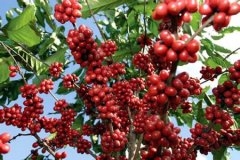
A brief introduction to the planting market price of Dominica boutique coffee beans with mellow taste
The earliest coffee in Dominica was introduced from Martinique (the overseas province of France), dating back to the early 18th century. Dominica is an island country with a tropical climate. The temperature changes little throughout the year. Except for the lower temperature in the Central Cordillera Mountains, which can reach less than 0 ℃ in winter, the annual average temperature in other areas is between 2530 ℃, which is affected by the mountain topography.

The flavor of Dominica coffee with pure and soft aroma describes the degree of grinding, taste, taste, baking degree.
In the early 18th century, coffee was introduced to Domiga from Martinique, and fine coffee was produced in the north represented by Hibao and in the south, including Okayabani Santo Domingo. Among them, the coffee produced by Santo Domingo and Barney, which is almost synonymous with domiga coffee, is a world-famous high-quality coffee. Santo Domingo coffee, which is characterized by freshness and elegance,

Taste full-bodied Dominican fine coffee beans Growing conditions Location Climate Altitude Profile
The Dominican Republic has also experienced a history of turmoil and poverty. Now that the country has implemented democratic elections and entered a period of stable development, it has not yet established formal diplomatic relations with China, but maintains so-called diplomatic relations with Taiwan. It seems that these things have nothing to do with coffee, but in fact they still have an impact. The exchanges between the two countries without diplomatic relations are subject to many restrictions in all aspects. Of course, they will also

A brief introduction to the history and culture of the origin and development of Dominican boutique coffee beans
Turning to the introduction of Dominican coffee, the most distinctive features are fresh and elegant, full of particles, excellent acidity and pleasant flavor (two colleagues agree with this). Such flavor characteristics are not only related to the variety and the quality of the soil, but also closely related to the picking and handling of raw beans. Dominica's coffee is selected by the most expensive manual method, workers.

A brief introduction to the description of taste and aroma characteristics of smooth and smooth Dominica boutique coffee beans
Turning to the introduction of Dominican coffee, the most distinctive features are fresh and elegant, full of particles, excellent acidity and pleasant flavor (two colleagues agree with this). Such flavor characteristics are not only related to the variety and the quality of the soil, but also closely related to the picking and handling of raw beans. Dominica's coffee is selected by the most expensive manual method, workers.

A brief introduction to the origin, development, history and culture of Dominica boutique coffee beans with mellow taste
The earliest coffee in Dominica was introduced from Martinique (the overseas province of France), dating back to the early 18th century. Dominica is an island country with a tropical climate. The temperature changes little throughout the year. Except for the lower temperature in the Central Cordillera Mountains, which can reach less than 0 ℃ in winter, the annual average temperature in other areas is between 2530 ℃, which is affected by the mountain topography.

A brief introduction to the description of flavor, taste and aroma characteristics of Dominican boutique coffee beans with excellent acidity
The name Dominica, which originally means Sunday, was taken by Columbus when he first came to America to discover it, because it happened to be a Sunday. This seemingly random name seems to be far-sighted today, because a good cup of coffee can bring people a relaxed and pleasant mood, which is why we are eager to bring us weekends after a busy week.

Brief introduction of planting Market Price of Dominica Fine Coffee Bean varieties with excellent acidity
The Dominican Republic has also experienced a history of unrest and poverty, and now the country has implemented democratic elections and entered a period of stable development, but it has not yet formally established diplomatic relations with China, but has maintained so-called diplomatic relations with Taiwan. It seems that this has nothing to do with coffee, but in fact, it still has an impact. The exchanges between the two countries that have not established diplomatic relations are subject to many restrictions in all aspects, and of course they will.

A brief introduction to the planting market price of smooth and smooth Dominican boutique coffee beans
Dominica is an island country with a tropical climate, with little change in temperature throughout the year. Except for the lower temperature in the Central Cordillera Mountains, which can reach less than 0 ℃ in winter, the average annual temperature in other areas is between 25 and 30 ℃, while affected by the mountain topography, the north and east face the northeast trade wind, with an annual precipitation of 1500-2500 mm, which belongs to a tropical marine climate.

A brief introduction to the origin, development, history and culture of Dominica boutique coffee beans with excellent acidity
The best place to produce is the Barahona region in the southwest, but Juncalito and Ocoa also produce a fine coffee, Santo Domingo coffee, which is characterized by freshness and elegance, fullness, excellent acidity and pleasant aroma, so it is worth it. Unlike coffee produced in Haiti, Dominica has a total of

Full-bodied Dominican Santo Domingo coffee flavor Taste Manor production characteristics Fine coffee medium
In the early 18th century, coffee was introduced to Dominica from Martinique, and the northern regions, represented by Ciba, and the southern regions, including Ocayabani Santo Domingo, produced fine coffee. Among them, Santo Domingo and Bani produced coffee, almost synonymous with Domica coffee, is world-famous quality coffee. Santo Domingo coffee, characterized by fresh and elegant,

Introduction to the flavor and taste of high-quality coffee beans in Dominica Coffee Manor
After the return of Santo Domingo to Spanish rule during the Haitian occupation (1821-1844), the local people gradually formed a consensus on independent statehood. On November 30th, 1821, the former Governor of Santo Domingo, General Jos Nez de Cceres, proclaimed the founding of the country, named Haiti, Spain, and expected to merge under the Greater Colombian State led by President Bolivar of South America. [3] but